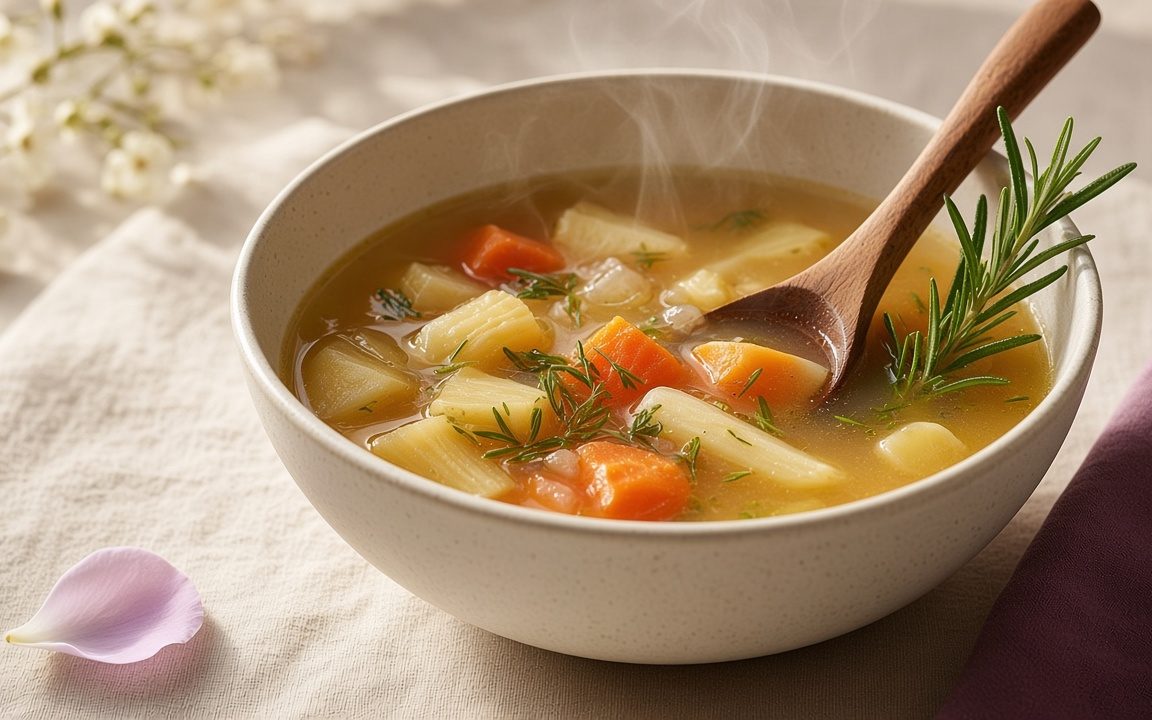
A pot of soup is one of the gentler ways to cook in cold weather. It can also follow the shape of Canada’s food guide: plenty of vegetables, a protein food, and a whole grain on the side or stirred through. This page shares three simple recipes and some practical notes on flavour, leftovers and food safety. It is not a treatment for a cold, the flu or any other illness, and no soup here is offered as a way to prevent or cure a disease.
Canada’s food guide treats mixed dishes such as soups as meals you can still “plate” in your mind. Aim for vegetables to make up about half of what goes into the pot, add a protein food such as beans, lentils or tofu, and serve a whole grain — barley in the soup, or whole grain bread on the side — as about a quarter of the meal. Water, or the soup itself, can help with everyday fluids. Health Canada also notes that water from foods such as vegetables and soups contributes to overall fluid intake.
Flavour without leaning only on salt
Soup can hide a lot of sodium, especially if it starts with a salty broth or canned ingredients. Canada’s food guide encourages choosing foods with little to no added sodium, sugars or saturated fat, and using the nutrition facts table to compare products. As a quick reading guide, 5% daily value or less is a little, and 15% or more is a lot.
A few habits help you keep flavour while going easier on the salt:
- Choose a lower-sodium vegetable broth, or use water plus herbs and spices and add salt at the end only if you need it.
- Rinse canned beans or lentils under water before they go in the pot.
- Build flavour with onion, garlic, celery, bay, thyme, pepper, lemon, vinegar or parsley.
- Taste before you salt. A squeeze of lemon at the table often brightens a soup more than another pinch of salt would.
Cooking a pot yourself also lets you control sauces and seasonings, which is one reason Health Canada encourages cooking more often.
Three simple soups
Each recipe makes about four servings, depending on appetite. Times are estimates. Use what you have: frozen vegetables are welcome, and extra canned beans can stand in where noted. If you cook for someone with allergies, read every label and skip or replace ingredients as needed.
Root vegetable and red lentil soup
Red lentils soften as they cook and give the soup a gentle body, so it does not need a thickener. This is a good place to use the pale winter vegetables that keep well in a Canadian kitchen.
You will need
- 15 mL (1 tablespoon) olive oil or canola oil
- 1 onion, chopped
- 2 carrots, chopped
- 2 celery stalks, chopped
- 1 parsnip or small sweet potato, chopped
- 2 garlic cloves, minced
- 15 mL (1 tablespoon) tomato paste
- 5 mL (1 teaspoon) ground cumin
- 2 mL (½ teaspoon) dried thyme
- 250 mL (1 cup) dry red lentils, rinsed
- 1.5 L (6 cups) lower-sodium vegetable broth or water
- Pepper, and lemon wedges to serve
Method
- Warm the oil in a large pot over medium heat. Cook the onion, carrots, celery and parsnip, stirring now and then, until the onion looks soft, about 8 minutes.
- Stir in the garlic, tomato paste, cumin and thyme for one minute.
- Add the lentils and broth. Bring to a gentle boil, then lower the heat and simmer, partly covered, until the lentils and vegetables are tender, about 20 minutes. Add a splash of water if the soup becomes thicker than you like.
- Season with pepper. For a smoother texture, mash some of the soup with a spoon or blend part of it. Serve with lemon and, if you like, a slice of whole grain bread.
White bean, cabbage and rosemary soup
Cabbage and canned white beans make a filling pot without much fuss. Rosemary is used here as a kitchen herb for flavour, not as a herbal medicine.
You will need
- 15 mL (1 tablespoon) olive oil or canola oil
- 1 onion, chopped
- 2 carrots, chopped
- 2 garlic cloves, minced
- 5 mL (1 teaspoon) chopped fresh rosemary, or 2 mL (½ teaspoon) dried
- 1 L (4 cups) chopped green cabbage
- 1 can (540 mL / 19 oz) white beans, drained and rinsed
- 1.25 L (5 cups) lower-sodium vegetable broth
- 15 mL (1 tablespoon) lemon juice or apple cider vinegar
- Pepper, and chopped parsley if you have it
Method
- Warm the oil in a large pot. Cook the onion and carrots until they begin to soften, about 7 minutes. Stir in the garlic and rosemary for one minute.
- Add the cabbage, beans and broth. Bring to a boil, then simmer until the cabbage is tender, about 15 to 20 minutes.
- Stir in the lemon juice or vinegar. Taste, add pepper, and finish with parsley. Whole grain toast on the side turns this into an easy supper.
Chickpea and barley pot
Barley is a whole grain, and chickpeas add protein, so the pot is hearty enough to be dinner.
You will need
- 15 mL (1 tablespoon) olive oil or canola oil
- 1 onion, chopped
- 2 carrots, chopped
- 2 celery stalks, chopped
- 150 g (¾ cup) pot or pearl barley, rinsed
- 1.5 L (6 cups) lower-sodium vegetable broth
- 1 bay leaf
- 2 mL (½ teaspoon) dried thyme
- 250 mL (1 cup) frozen peas or green beans
- 1 can (540 mL) chickpeas, drained and rinsed
- Pepper and parsley
Method
- Warm the oil in a large pot. Cook the onion, carrots and celery until the onion is soft, about 8 minutes.
- Stir in the barley, then add the broth, bay leaf and thyme. Bring to a boil, then simmer until the barley is tender, about 30 to 40 minutes. Add water if you need to.
- Stir in the peas or green beans and the chickpeas. Cook another 5 minutes, until everything is hot. Remove the bay leaf, add pepper and parsley, and serve.
Storing and reheating leftovers safely
Health Canada’s leftover guidance is worth following with soup, because a large pot cools slowly.
- Keep food out of the temperature “danger zone” between 4°C (40°F) and 60°C (140°F), where harmful bacteria can grow more easily.
- Throw away any cooked food left at room temperature for more than two hours. Do not rely on smell or taste to decide whether leftover food is safe.
- Refrigerate leftovers promptly in uncovered, shallow containers so they cool quickly. Very hot soup can sit until it stops steaming, then go into the fridge. Leave the lid loose until the soup is cold.
- Eat refrigerated leftovers within 2 to 3 days, or freeze them. Dating the container helps.
- Thaw frozen soup in the refrigerator or in the microwave, then cook or eat it right away.
- Reheat leftovers to a safe internal temperature of 74°C (165°F). Bring soups to a full, rolling boil and stir as they heat. Discard any reheated leftover that you do not eat.
If you reheat in a microwave, use a microwave-safe container, loosen the lid so steam can escape, and stir halfway through so the heat spreads evenly.
Making one pot last
Health Canada suggests cooking once and eating twice, and names soups as a good candidate for batch cooking. Freeze some in meal-size portions once the soup has cooled.
Let people add their own finish at the table — pepper, herbs or lemon — so the pot itself can stay quieter on salt.
References
These sources were checked when this article was written. They are offered so you can read the same public information we used.
- Health Canada, Make healthy meals with Canada’s food guide plate. https://www.canada.ca/en/health-canada/services/food-guide/eating-support/cooking/make-healthy-meals-plate.html
- Health Canada, Cook more often. https://www.canada.ca/en/health-canada/services/food-guide/explore/healthy-eating-recommendations/cook-more-often.html
- Health Canada, How to use food labels to make healthier choices. https://www.canada.ca/en/health-canada/services/food-guide/eating-support/choosing-food-drinks/how-use-labels-make-healthier-choices.html
- Health Canada, Food safety tips for leftovers. https://www.canada.ca/en/health-canada/services/general-food-safety-tips/food-safety-tips-leftovers.html
- Health Canada, Canada’s Dietary Guidelines: Section 1, Foundation for healthy eating. https://www.canada.ca/en/health-canada/services/food-guide/explore/dietary-guidelines/section-1-foundation-healthy-eating.html
- Health Canada, Cooking with plant-based protein foods. https://www.canada.ca/en/health-canada/services/food-guide/eating-support/kitchen/cooking-skills/cooking-plant-based-protein-foods.html