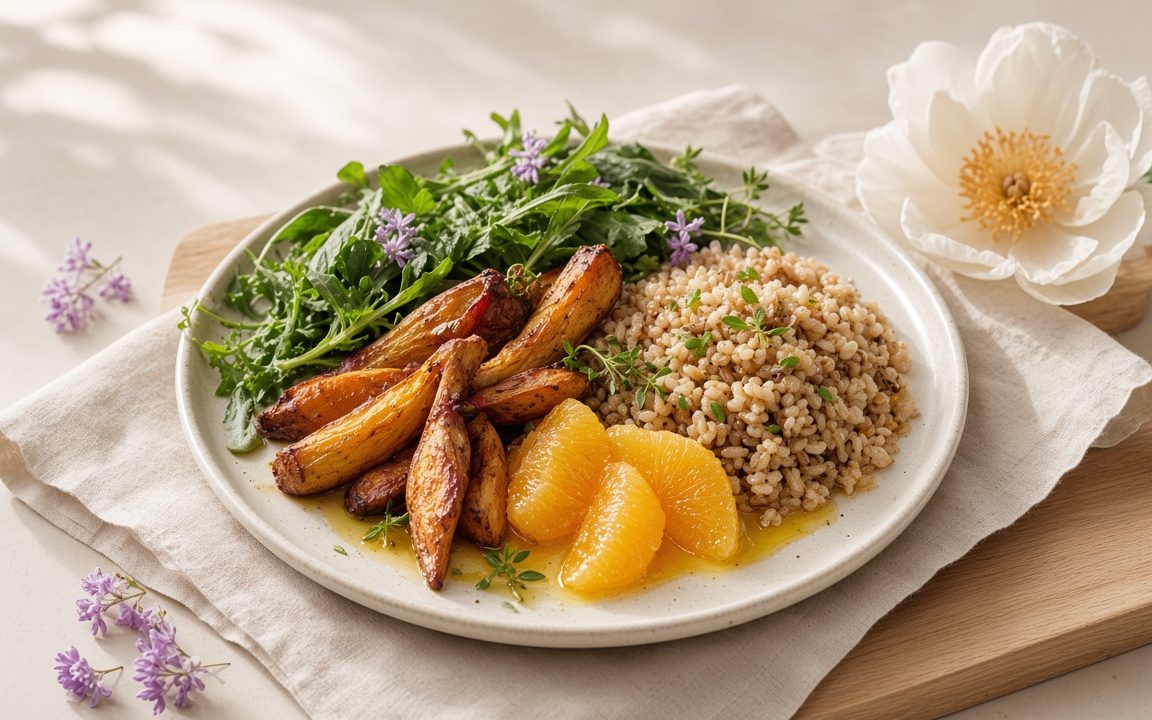
Healthy eating does not have to mean a new set of rules every January, or a plate that looks nothing like the food you already enjoy. Canada’s food guide is built around a simple picture: half vegetables and fruits, one-quarter whole grain foods, and one-quarter protein foods, with water as the drink of choice. You can use those proportions as a guide whether supper is on a plate, in a bowl, in a lunch box or shared from a pot.
This article is general information about that pattern. It is not a meal plan, a weight-loss program or nutrition therapy for a medical condition. If you have a condition that affects what you can eat, or if eating itself has become stressful, a regulated healthcare provider can help you find advice that fits you. In Alberta, a Registered Dietitian is a regulated health professional; a nutrition specialist or herbalist is not a substitute for that kind of medical or dietetic care.
Start with the plate, not with perfection
Canada’s food guide suggests making vegetables and fruits the largest part of what you eat through the day — about half of a meal or snack. One-quarter of the plate is whole grain foods, such as whole grain bread, whole grain pasta, brown rice, wild rice or quinoa. The remaining quarter is protein foods. The guide encourages choosing protein foods that come from plants more often.
The pictures on the official plate are examples, not a shopping list you must copy, and they are not meant to show an exact serving size. Fresh, frozen, canned and dried foods can all count. That matters in a Canadian winter, when a bag of frozen peas or a tin of lentils may be the most practical choice on a Tuesday night.
Canada’s dietary guidelines also note that nutritious foods can reflect cultural preferences and food traditions, and that eating with other people can be part of healthy eating. The pattern is meant to flex around the foods you already know and like.
Vegetables and fruits as the larger half
Think of colour and variety over the week rather than a perfect tally at every sitting. Leftover roasted carrots beside a bowl of lentils, berries on oatmeal, a handful of cherry tomatoes with hummus and crackers, or extra peppers stirred into a soup all move a meal toward that larger half.
If you use canned vegetables or fruits, compare labels and look for products with little to no added sodium or sugars when you can. Frozen vegetables without sauce are often a straightforward choice. Dried fruit can belong with a meal; Health Canada notes that it is sticky and can cling to teeth, so it is better eaten with meals than sipped or snacked on all afternoon.
Whole grain foods
Whole grain foods include the entire grain. They can be as everyday as oatmeal, brown rice, whole grain bread or barley in a soup. If you are choosing a packaged grain product, the ingredients list is helpful: the first ingredients tell you what the food contains most of, by weight.
You do not need to abandon foods you love. A familiar pasta night can still follow the plate if half the bowl is vegetables and a quarter is a protein food such as beans, lentils or tofu.
Protein foods, with plants more often
Canada’s dietary guidelines say that among protein foods, plant-based choices should be eaten more often. Health Canada’s kitchen guidance names many of those foods: beans, lentils, chickpeas, tofu, tempeh, nuts, seeds, nut butters and unsweetened fortified soy beverages.
A few everyday swaps illustrate the idea without turning supper into a project: lentils in a chilli, chickpeas tossed through a salad, peanut butter on apple slices, or tofu in a stir-fry that is already half vegetables.
Mixed dishes still follow the same idea
Most home cooking is mixed together. Canada’s food guide says you can still use the plate as a reference for soups, stir-fries, casseroles and other combined dishes by thinking about the proportions going into the pot. For a stir-fry, that might mean plenty of vegetables, a protein food such as tofu or chickpeas, and a whole grain such as brown rice on the side or mixed through.
The same thinking works for breakfast. Oatmeal with enough berries and chopped fruit to fill half the bowl, or apple slices over toast with peanut butter, both follow the same proportions.
What you drink matters too
Health Canada recommends making water your drink of choice. Water quenches thirst and helps you stay hydrated without adding calories. Other everyday options include unsweetened fortified soy beverage, and unsweetened coffee and tea.
Drinks to have less often include sugary drinks, alcoholic drinks, some vegetable juices, and specialty coffees or teas that are high in added sugar or saturated fat. Plant-based beverages should not be the main milk source for a child younger than two years of age.
Using the nutrition facts table
When you compare packaged foods, Canada’s food guide suggests three steps. First, notice the serving size — the numbers on the table are for that amount, which may not match what you actually eat. Second, use the % daily value: 5% or less is a little, and 15% or more is a lot. Third, read the ingredients list, which is written in order of weight.
When you are choosing between two similar products, look for ones with less sodium, less sugars and less saturated fat. Nutrients many people want more of, such as fibre, iron, calcium and potassium, are often found in vegetables, fruits and other foods that may not even carry a table.
Cooking more often, in a way that fits your life
Cooking more often can make it easier to choose vegetables, fruits, whole grains and protein foods, and to rely a little less on highly processed foods. It also lets you control sauces and seasonings. That does not mean every meal must be cooked from scratch on the day you eat it.
Health Canada’s practical ideas include cooking once and eating twice, batch-cooking soups and stews, and keeping handy ingredients such as canned beans, frozen vegetables, lower-sodium vegetable broth, and herbs and spices. Methods that need little added fat — roasting, steaming, baking, grilling or stir-frying — are useful tools, not rules you have to follow every night.
Healthy eating is a pattern over time. One hurried sandwich does not undo a week of meals you felt good about, and one carefully composed plate does not need to carry the whole story of your health.
References
These sources were checked when this article was written. They are offered so you can read the same public information we used.
- Health Canada, Canada’s food guide. https://www.canada.ca/en/health-canada/services/food-guide.html
- Health Canada, Make healthy meals with Canada’s food guide plate. https://www.canada.ca/en/health-canada/services/food-guide/eating-support/cooking/make-healthy-meals-plate.html
- Health Canada, Canada’s Dietary Guidelines: Section 1, Foundation for healthy eating. https://www.canada.ca/en/health-canada/services/food-guide/explore/dietary-guidelines/section-1-foundation-healthy-eating.html
- Health Canada, Cooking with plant-based protein foods. https://www.canada.ca/en/health-canada/services/food-guide/eating-support/kitchen/cooking-skills/cooking-plant-based-protein-foods.html
- Health Canada, Make water your drink of choice. https://www.canada.ca/en/health-canada/services/food-guide/explore/healthy-eating-recommendations/make-water-drink-choice.html
- Health Canada, How to use food labels to make healthier choices. https://www.canada.ca/en/health-canada/services/food-guide/eating-support/choosing-food-drinks/how-use-labels-make-healthier-choices.html
- Health Canada, Cook more often. https://www.canada.ca/en/health-canada/services/food-guide/explore/healthy-eating-recommendations/cook-more-often.html