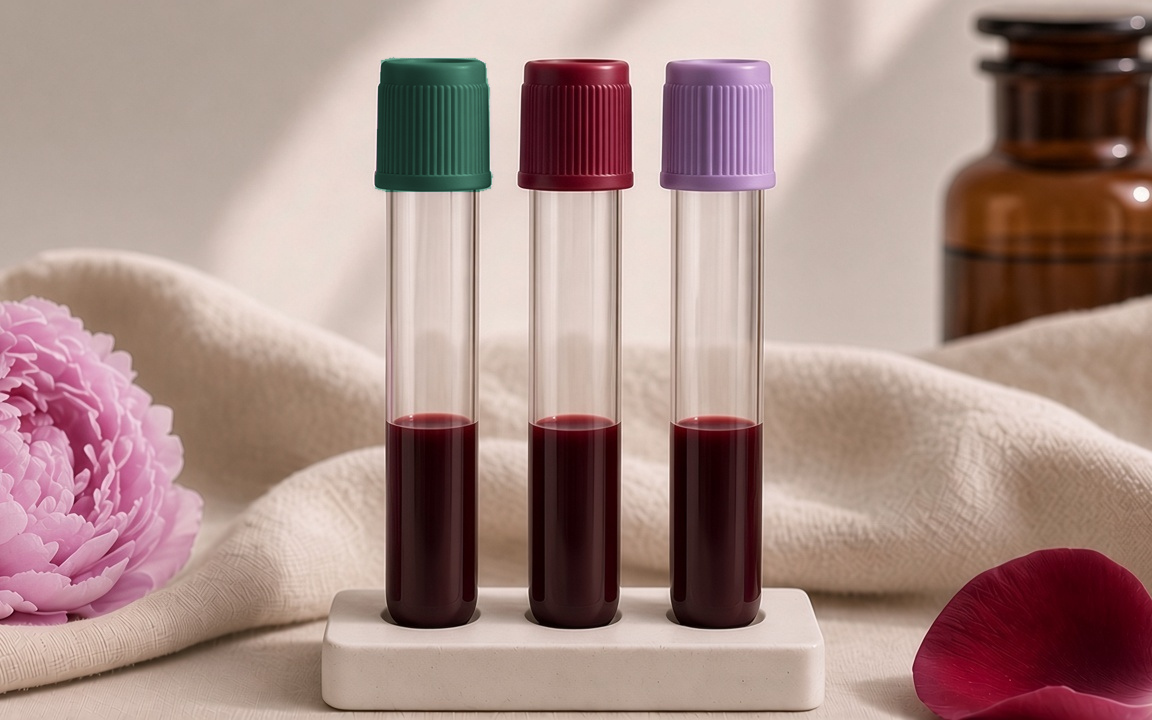
A laboratory report can look like a second language: short names, units and a column of numbers beside a “normal” range. This guide explains what several common blood tests measure, how you may be asked to prepare, and how to use the report as a starting point for a conversation. It cannot tell you what your own results mean, and it is not a diagnosis. Your results belong in the wider story of your health — how you feel, the medicines and products you take, and what else is going on in your life.
Blood work is one part of the picture
Healthcare providers order blood tests to look into symptoms such as fatigue, weakness, fever, bruising or weight change; to screen for certain conditions; to see how a medicine is agreeing with you; or to keep an eye on something you already know about.
No single number stands alone. MyHealth.Alberta.ca notes that each laboratory has its own range for what it calls normal, that the range is only a guide, and that a value outside that range may still be typical for you. Age, sex, pregnancy, other health conditions and even how much fluid is in your body can all shape a result.
How to prepare for common tests
Preparation is not the same for every test, so use the instructions from the laboratory or the clinician who ordered the work.
- A complete blood count usually needs no special preparation.
- A fasting blood glucose test typically means no food or drink other than water for at least 8 hours beforehand.
- For cholesterol and triglyceride tests, you may be asked not to eat or drink anything except water for 9 to 14 hours. Fasting is not always required, but it may be recommended. MyHealth.Alberta.ca also advises not drinking alcohol for 24 hours before those tests.
- A ferritin test usually needs no special steps unless you are told otherwise.
- If you take thyroid medicine, say when you took your last dose. You may be asked to pause it for a short time before thyroid hormone testing.
- Before some kidney tests, you may be asked to avoid strenuous exercise for 48 hours and to limit a large serving of meat for 24 hours.
Tell the person ordering the test about all medicines and natural health products you take. Some products can affect a result. If you use a natural health product, look for an eight-digit Natural Product Number (NPN) or Homeopathic Medicine Number (DIN-HM) on the label, which means Health Canada has licensed it for sale when it is used as directed.
A complete blood count (CBC)
A CBC looks at the kinds and numbers of cells in your blood — especially red blood cells, white blood cells and platelets. Red blood cells carry oxygen from the lungs through the body. Hemoglobin is the protein inside those cells that carries oxygen and gives blood its colour. Hematocrit describes how much of the blood’s volume is made up of red cells. Low values may point toward anemia, which has many possible causes. High values can have other explanations, including how much fluid is in the body at the time of the test.
White blood cells help the body respond to infection. Their total number, and the mix of different types, can offer clues about infection, inflammation or a reaction to a medicine. Platelets help blood clot. Too few or too many can matter for bleeding or clotting. Only a clinician can put those numbers in context. A blood draw usually feels like a brief sting or pinch; a small bruise at the site is common, and serious problems from the draw itself are uncommon.
Blood glucose and the A1C test
A blood glucose test measures sugar in the blood. A fasting blood sugar is taken after you have not eaten for at least 8 hours and is often used as an early check for prediabetes or diabetes. A random blood sugar can be taken without that waiting period.
The A1C test (also called hemoglobin A1C) shows the average level of blood sugar over about the past 2 to 3 months. It may be used to help diagnose diabetes or prediabetes, or to see how glucose has been running over time. It is not the right test for everyone. Pregnancy in the second or third trimester, a recent blood loss or transfusion, sickle cell disease, hemodialysis and some medicines that affect red blood cells can all change how the result should be read. If you have questions about a glucose or A1C result, review them with a regulated healthcare provider rather than trying to interpret them on your own.
Cholesterol and triglycerides
Cholesterol and triglyceride tests measure fats, often called lipids. A typical report may include total cholesterol, triglycerides, HDL cholesterol (often called “good” cholesterol) and LDL cholesterol (often called “bad” cholesterol).
Providers may use these results with other information — such as blood pressure, whether you have diabetes, your age and sex, and whether you smoke — when they talk about heart and blood-vessel risk. The numbers alone do not tell the whole story, and they are not a reason to start or stop a medicine on your own.
Thyroid hormone tests
The thyroid is a small gland in the front of the neck that makes hormones to help regulate how the body uses energy. Blood tests may measure thyroxine (T4), including free T4, and triiodothyronine (T3), often to help explain a thyroid-stimulating hormone (TSH) result or to follow treatment that has already been started.
Many things can change thyroid hormone levels. A clinician will talk with you about unusual results in light of your symptoms and past health. Everyday foods, teas or supplements should not be used to treat a thyroid number you see on a report.
Ferritin, and how much iron you have stored
Ferritin is a protein that binds iron, and the amount in the blood is used as a window onto iron stored in the body. The test may be ordered to look into anemia, inflammation, too much stored iron, or how iron treatment is going. Low ferritin often points toward low iron stores, which can follow blood loss, pregnancy or too little iron in the diet. High ferritin can have many causes as well. Either result is a starting point for a conversation, not a plan to carry out on your own.
Creatinine and how the kidneys filter waste
Creatinine is a waste product formed when creatine — made when food is turned into energy — is broken down. Healthy kidneys remove creatinine from the blood and pass it out in urine. A blood creatinine level is one way to look at how the kidneys are working. If they are not filtering as they should, creatinine in the blood may rise. The amount also depends partly on muscle mass, so men often have higher levels than women. Dehydration, some medicines, diet and muscle injury can all influence the number.
How to read the numbers on your report
Most reports list the test name, your result, the units and the laboratory’s reference interval. Flags such as “H” or “L” only mean the number sits outside that printed range. They do not tell you how important the finding is or what to do next. Resist matching a single flagged result to a condition you have read about online, or to a supplement that claims to correct a lab value. If a packaged natural health product makes a health claim, check that it has an NPN or DIN-HM. Even then, a licensed product is not a personal treatment plan.
Questions that can help at your next visit
You might write down a few of these before you sit down with your provider:
- Why was this test ordered for me?
- Did I need to fast or change any medicines beforehand, and did that go as planned?
- Which results matter most in my situation, and which ones are you not concerned about?
- Could anything else — including pregnancy, recent illness, dehydration, or a medicine or natural health product — have influenced the numbers?
- Do I need another test, a different kind of test, or a follow-up visit?
- What symptoms should prompt me to get in touch sooner?
You can always ask for an explanation in everyday language, and you can ask for time to think before you decide on next steps.
References
These sources were checked when this article was written. They are offered so you can read the same public information we used.
- MyHealth.Alberta.ca, Complete Blood Count (CBC). https://myhealth.alberta.ca/Health/tests-treatments/pages/conditions.aspx?Hwid=hw4260
- MyHealth.Alberta.ca, Blood Glucose: About This Test. https://myhealth.alberta.ca/Health/aftercareinformation/pages/conditions.aspx?hwid=ad1603
- MyHealth.Alberta.ca, A1c test. https://myhealth.alberta.ca/Health/pages/conditions.aspx?hwid=acc5011&lang=en
- MyHealth.Alberta.ca, Cholesterol and Triglycerides Tests. https://myhealth.alberta.ca/Health/tests-treatments/Pages/conditions.aspx?hwid=hw207814
- MyHealth.Alberta.ca, Thyroid Hormone Tests. https://myhealth.alberta.ca/Health/tests-treatments/pages/conditions.aspx?Hwid=hw27377
- MyHealth.Alberta.ca, Ferritin Test. https://myhealth.alberta.ca/Health/pages/conditions.aspx?hwid=hw6212
- MyHealth.Alberta.ca, Creatinine and Creatinine Clearance Tests. https://myhealth.alberta.ca/Health/tests-treatments/pages/conditions.aspx?Hwid=hw4322
- Health Canada, Licensed Natural Health Products Database. https://www.canada.ca/en/health-canada/services/drugs-health-products/natural-non-prescription/applications-submissions/product-licensing/licensed-natural-health-products-database.html
- Public Health Agency of Canada, Mental health support: Get help. https://www.canada.ca/en/public-health/services/mental-health-services/mental-health-get-help.html